
Water heaters
Is the tank gone, or is it something above it
Water pooling under a heater sends most people straight to replacement. Four different faults produce the same puddle, and only one of them means the tank is finished. Find the source first.
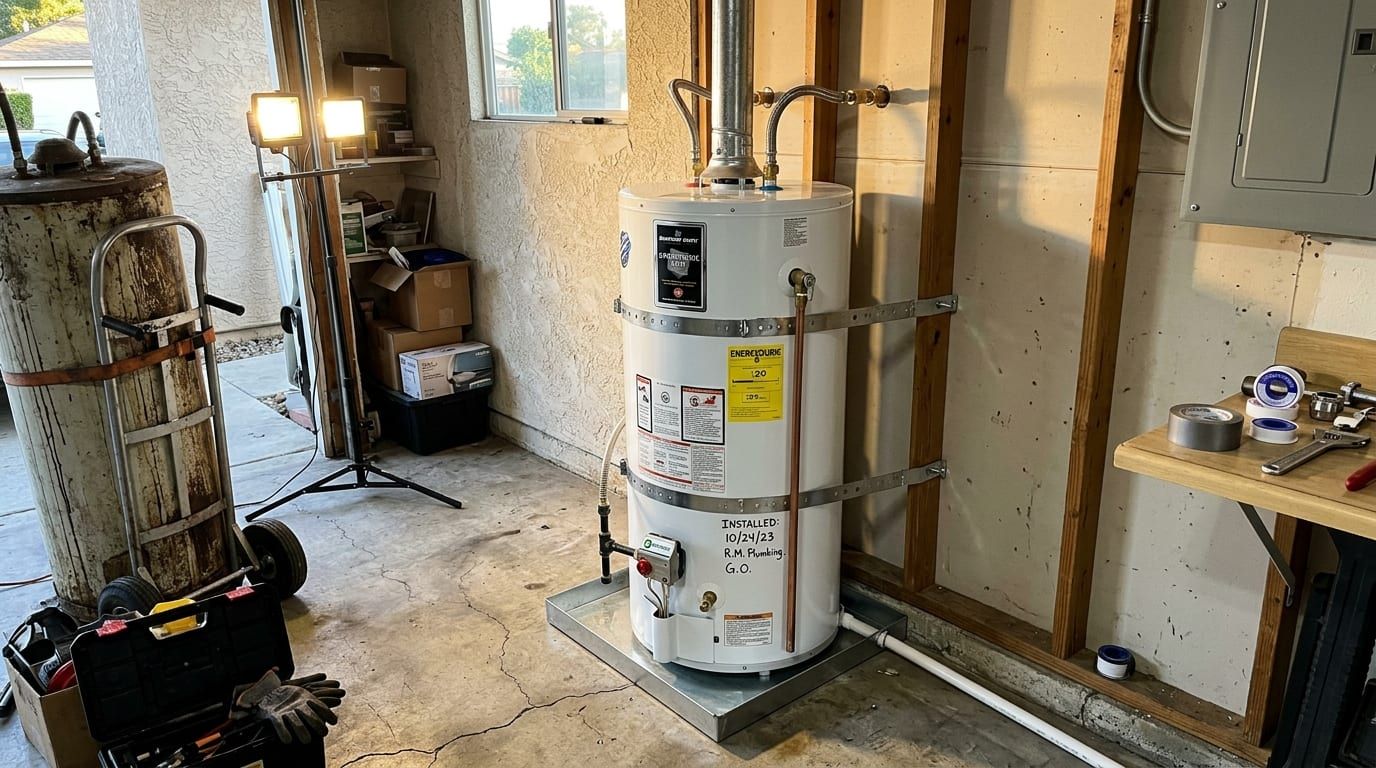
Water pooling under a water heater is most often the tank itself, and a tank that has rusted through cannot be repaired, because the steel is the vessel and there is no patch for it. But before anyone talks about replacement, spend the hour it takes to prove that is what you have. Three other faults leak to exactly the same spot: the drain valve at the base, the temperature and pressure relief discharge line running down the side, and connections at the top dripping down the outside of the jacket. Two of those three are ordinary repairs on an otherwise healthy heater.
Do these four things first
Reading where the water reappears
Wet at the drain valve
The valve at the bottom front is the single most common false alarm. Plastic valves weep as they age, the hose thread seeps when there is no cap on it, and a valve that was opened once to flush the tank often never seats properly again because sediment lodges under the washer. This is a replacement part on a sound tank, and on a heater with years left in it that is the whole job.
Wet at the bottom of a pipe running down the side
That pipe is the temperature and pressure relief discharge, and if it is releasing water it is doing precisely what it exists to do. The heater is telling you that pressure or temperature went past the limit. The usual cause is thermal expansion in a closed system with no expansion tank, or with an expansion tank that has lost its air charge and filled with water. A thermostat drifting high does it too. Never cap that line, never fit a valve in it and never plug it. Diagnose what is pushing the pressure up instead.
Wet at the top, tracking down the outside
Follow it upwards. Flex connectors, unions and the nipples where dissimilar metals meet all corrode and weep, and gravity carries the result down the side of the jacket to the floor, where it looks exactly like a failed tank. Repiping the top of a heater is a modest job and it does not touch the tank.
Wet underneath the centre with no traceable point
That is the tank. There is nothing to tighten and nothing to replace. The vessel is steel with a glass lining, the lining develops flaws, water reaches the steel, and corrosion works outward until it weeps at a seam or through the bottom head. Once it starts it does not stop, and it usually gets worse quickly.
Why tanks in this city give up from the inside
Every tank contains a sacrificial anode rod, a length of reactive metal that corrodes in place of the steel. It is consumed over time and almost nobody ever inspects it. On local groundwater, drawn from wells into the Orange County basin, the water carries the mineral content that keeps that electrochemistry busy, so the anode does its work and disappears. Once the rod is spent the steel is next in line. The sediment layer plays its own part: deposit sitting on the bottom head holds hot water against the steel and keeps that area working harder than the rest of the vessel.
Can it wait until morning
Sometimes, and we will tell you so rather than sell you a night call-out. If the leak is a slow weep, the water is off at the inlet, the unit sits in a pan with a drain that works, and it is a garage slab that falls towards the door, then it can generally wait for a normal appointment. If the heater sits above living space, on an upper floor, on finished flooring, next to an electrical panel or in a closet against drywall, it should not wait. Neither should it wait if water keeps arriving after the inlet valve is closed, because that is tank content emptying and there is a lot of it.
Repair or replace, decided honestly
What we do on the call
Dry the area, isolate the unit, and find the source before saying anything about it. Then a gauge goes on a hose bib to read static pressure, the expansion tank gets checked with the water side depressurised, and the rating plate date gets read out loud. If we are recommending a replacement you get shown the wet steel it is based on. Evidence first, opinion second, in that order every time.
After the new one goes in
Two habits keep the next heater out of trouble. Flush the tank once a year so mineral does not build into a bed on the bottom head. And write the installation date on the jacket with a permanent marker, in big numbers, where you will see it. When it starts weeping in ten or twelve years, that date is the first thing anyone will ask for, and the rating plate will by then be behind a sticker, a strap or a wall.