
Water heaters
The sacrificial part that decides a heater’s life
Every glass-lined steel water heater contains one part designed to be destroyed so the tank is not. Most homeowners never look at it, and most tanks fail for exactly that reason. Here is how to check yours and what to do about what you find.
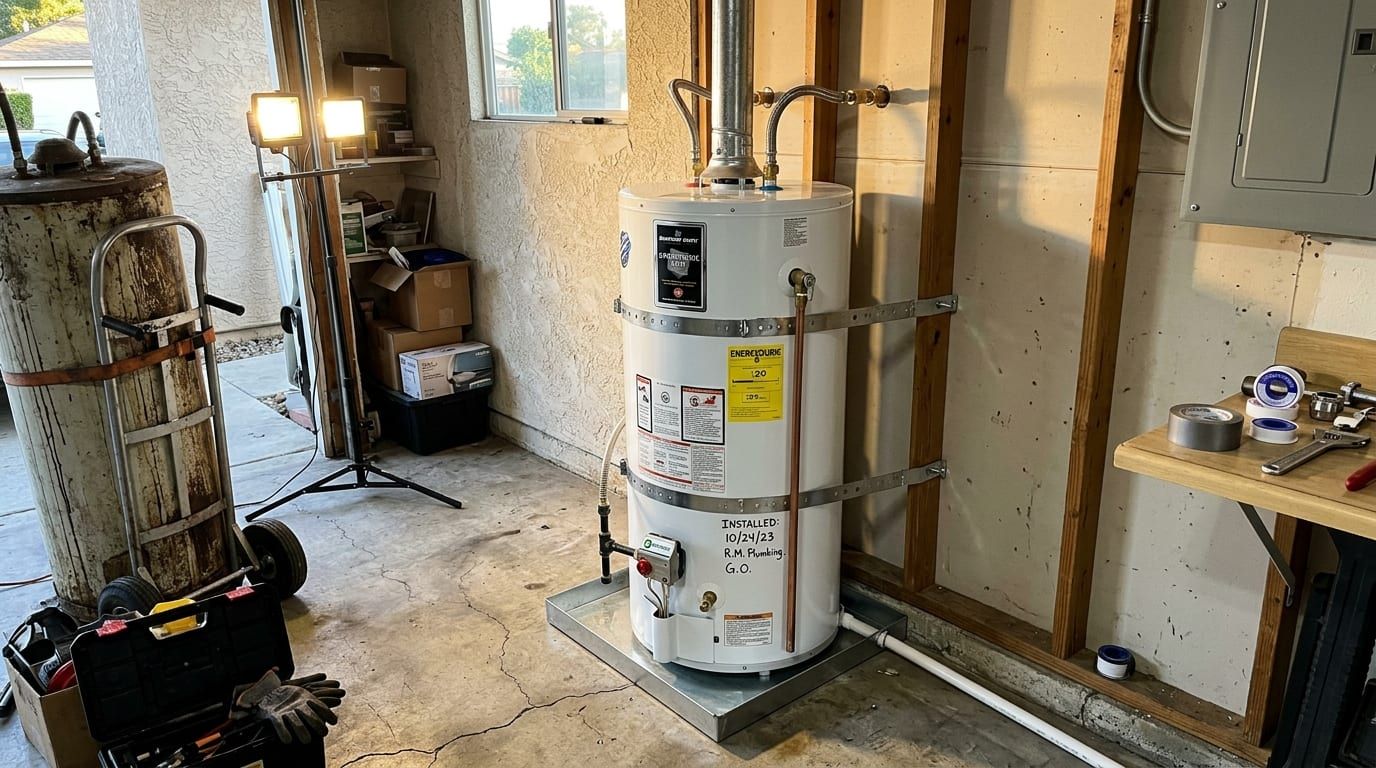
What the rod is actually for
A storage water heater is a steel tank with a glass lining sprayed on the inside. The lining is never perfect. There are always small gaps at welds, at fitting threads and wherever the coating thinned during manufacture, and hot water finds every one of them. Left alone, bare steel in hot water corrodes and eventually perforates, which is the day you find water across the garage floor.
The anode rod prevents that by being more attractive to corrosion than steel is. It is a length of magnesium or aluminium alloy hanging down inside the tank, wired electrically to the tank body, and it gives up its own metal so the exposed steel does not have to. It is consumed on purpose. When it is gone, the protection is gone, and the tank starts spending its own wall thickness instead. Nothing announces this. The heater keeps making hot water right up until it does not.
How to tell whether yours is finished
There is no gauge and no warning light. The only way to know is to pull the rod and look at it, and the result is unmistakable. A healthy rod is a fat, pitted cylinder of metal. A spent one is a thin steel core wire with a few clumps of alloy still clinging to it, sometimes almost bare for most of its length. Anything approaching that second description means replace it now.
The check itself is straightforward on a heater that was installed with clearance and access. Kill the power at the breaker or turn the gas control to pilot, shut the cold inlet, open a hot tap upstairs to break the vacuum, and drain a few gallons so the water level sits below the rod port. Then loosen the hex head on top with a socket and a long bar. On a heater installed in a closet with a low ceiling, the rod may be longer than the space above the tank, which is where a segmented flexible rod earns its place.
The three types, and where each one belongs
Magnesium
Magnesium is the most electrically active of the common choices, so it protects the tank most strongly and is consumed fastest. It is the default fitted at the factory in many heaters and the sensible first choice in mineral-bearing water, provided you accept that it will need replacing sooner.
Aluminium and zinc alloy
An aluminium alloy rod, usually with a small percentage of zinc, lasts longer and protects slightly less aggressively. The zinc content is the reason it is the standard answer to a sulphur smell. It is a reasonable choice on a heater that is hard to reach and will realistically be inspected less often.
Powered
A powered anode is a titanium rod driven by a small plug-in unit rather than by sacrificing metal. Nothing is consumed, so it does not need periodic replacement, and it deals with smell problems reliably. It costs more up front, needs an outlet within reach, and is only worth fitting to a tank with plenty of life left in it.
The rotten-egg smell, and why the rod is involved
If the hot water smells of sulphur and the cold does not, the rod is almost certainly part of the story. Harmless sulphate-reducing bacteria in the tank react with the hydrogen released by a magnesium rod and produce hydrogen sulphide, which is the smell. It is a nuisance rather than a health problem, and it is specific to the hot side, which is the detail that identifies it.
The usual fix is switching to an aluminium-zinc rod or a powered one, along with a hot flush of the tank to knock the bacteria population back. What is not a fix is pulling the rod out and leaving the port plugged. That does stop the smell, and it also removes the tank’s only corrosion protection, which trades a smell you can live with for a leak you cannot.
What makes this awkward in a real garage
When replacing the rod is the wrong call
An anode is a cheap way to extend the life of a healthy tank. It does nothing for a tank that has already lost the argument. If there is rust weeping at the base, staining around the fittings, or moisture in the drip pan that keeps coming back, the steel has already been perforated somewhere and a new rod arrives too late. The same applies to a heater with a sediment bed heavy enough that the drain valve will not pass water: you are maintaining an appliance that has other reasons to fail first.
We will say that on site rather than fit a part to a tank that does not warrant one. Selling the smaller job when the smaller job is right only works if we are also willing to say when it is pointless.
A rhythm that suits the water here
Costa Mesa’s supply comes from local groundwater, and the housing stock is old, with a median build year of 1972. Water heaters in this city work harder than heaters in soft-water regions do, and rods are consumed faster. A sensible pattern is to look at the rod the first time at around the two- or three-year mark, then set the next interval based on how much of it was left. If half is gone in three years, check every two. If it is barely touched, you have a longer leash.
Do it on the same visit as the annual drain, because the tank is already isolated and partly empty and the extra work is minor. The companion article on this site covers what scale is doing to the same tank at the same time. Between the two of them, corrosion and scale account for most of the water heaters that get replaced here, and both are slower than most people assume when somebody actually looks.