
Emergency plumbing
What actually needs a plumber tonight, and what can wait for Tuesday
Calling out a plumber at midnight for something that could have waited is annoying. Waiting until morning with something that could not is expensive. Here is where the line actually sits.
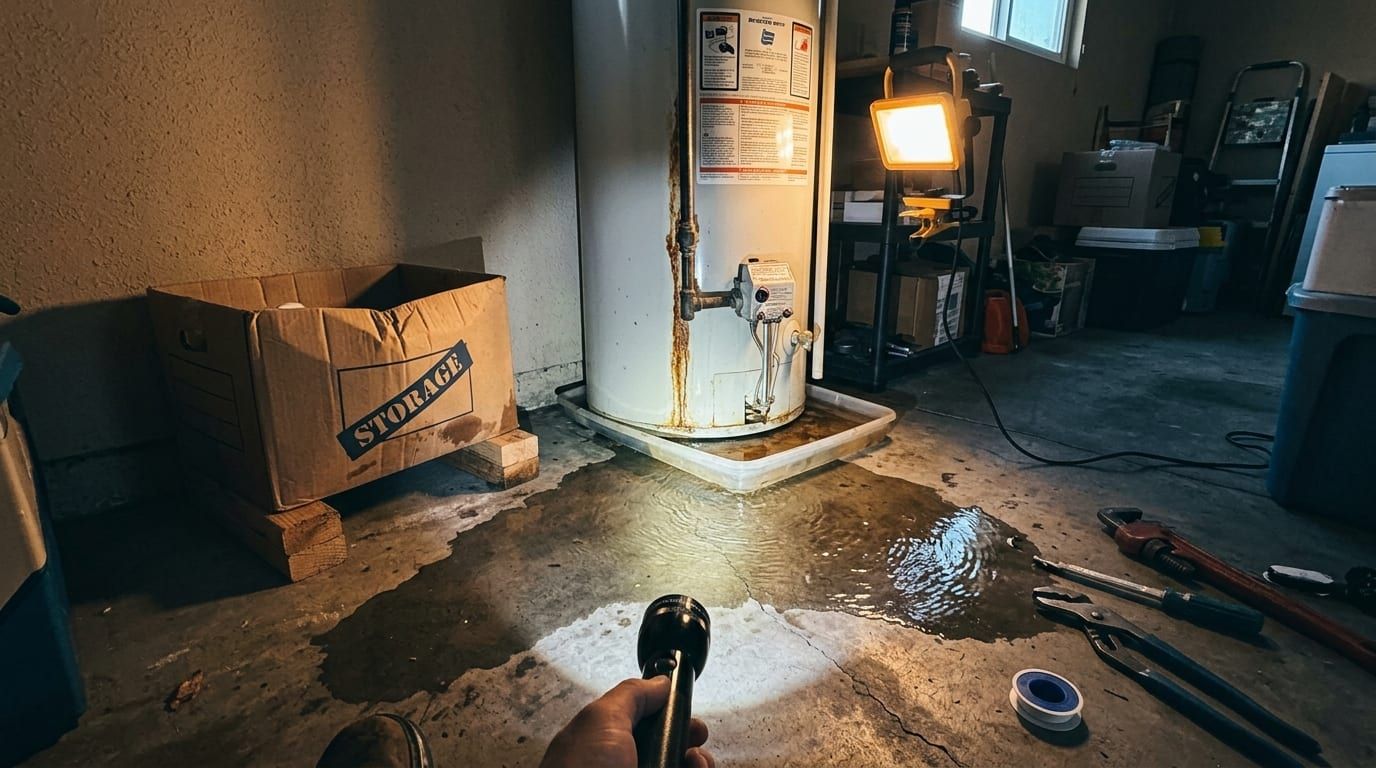
Call tonight, without waiting
These are the situations where the cost of waiting rises by the hour rather than staying flat.
Call in the morning, but do call
These are urgent without being nocturnal. They will not improve overnight, and every one of them is cheaper on a Tuesday than on a Sunday.
The quiet emergencies nobody recognises
The expensive failures in this city are rarely the dramatic ones. They are the ones that run for weeks.
A warm patch on the floor
In a slab-on-grade Costa Mesa house, a warm area of floor with nothing above it to explain the heat is a hot-water slab leak until proven otherwise. It is soaking the ground under your foundation the entire time, and the repair only gets larger.
A meter dial that moves with everything closed
Shut every tap and appliance, then watch the meter. Movement means water is escaping between the meter and your fixtures. This is the single most useful ten-minute test a homeowner can run, and it costs nothing.
A drain that backs up every few months
Recurring is not the same as occasional. A line that blocks on a rhythm has something structural holding solids — a belly, an offset joint, roots — and cabling it again only resets the clock. A camera run tells you which of the three you have.
Rust colour on the first draw of the morning
In a pre-1960 house that usually means the inside of galvanised supply pipe is corroding. It will not stop, and the pressure has probably been falling for years without anyone noticing.
What tips a small problem into an emergency
Three things, mostly: how fast water is arriving, what it is soaking, and whether anyone is exposed to it. A drip into a bucket is not an emergency. The same drip into a wall cavity full of insulation is a mould problem in a fortnight. The same drip onto a consumer unit is an emergency immediately.
When you are not sure, phone and describe it. We would rather talk you through shutting a valve and booking a morning visit than have you sit up all night wondering, and we will tell you honestly when something can wait.
The water heater gives notice before it fails
Mesa Water District draws its entire supply from nine local wells, and groundwater carries mineral. That mineral drops out where the water gets hot, so the inside of your tank, or the heat exchanger of a tankless unit, is collecting a layer nobody sees. The signs are quiet and specific.
The sewer tells you first, in another room
Drainage trouble announces itself at the fixture lowest and nearest the blockage, which is rarely the fixture you were using. The pattern matters more than any single event.
Any of those earns a camera run rather than another clearing. Because the Costa Mesa Sanitary District treats the lateral as yours out to its main, the length worth filming includes the part under the street, and the district runs a rebate on a CCTV inspection of it.
What we do with a sign before we call it anything
A sign is evidence of a symptom, not a diagnosis, and the order of work matters. A gauge goes on a hose bib before anyone discusses a repipe, because failing pressure at the fixtures and a failing regulator look identical from the kitchen and are entirely different jobs. A camera goes down the line before anyone recommends sewer work, because a belly, an offset joint and root intrusion all present as a recurring backup and need different answers.
What the camera shows also decides how the line gets cleared. Cabling opens a channel through the blockage and gets the house working again, while jetting scours the pipe wall back to bare material. On a kitchen line closing with grease that is the difference between next month and next year, and on fragile old clay it is a decision made with the footage in front of you.
Signs that look alarming and usually are not
Mesa Water treats groundwater carrying an amber tint from ancient decomposed redwood in the aquifer, and it is not rust. The tell is consistency: the tint shows at every tap, hot and cold, at any hour, and it does not clear after the first draw. The corrosion colour described earlier behaves the other way around, arriving in the first draw after the house has stood quiet and then running clear.
A single bang when a washing machine valve snaps shut is water hammer, and one appliance doing it occasionally is not urgent. Air spitting from taps for a day after crews have worked on the street main clears itself. Condensation on a cistern in humid weather reads exactly like a leak until you dry the porcelain and watch it for ten minutes. Each earns a call when it changes character rather than when it first appears: hammer that has become constant, a tint that arrives suddenly and with a smell, air still in the line a week later.