
Drains
Clearing a sink your disposal has blocked
A disposal backup is one of three faults, and the sound the motor makes tells you which one you have. This walks through the jam, the reset, the trap and the dishwasher hose, and where the line between a home fix and a plumbing job sits.
Turn the disposal off and stop running water into the sink. If the bowl is holding standing water and the motor is either humming or silent, adding more water only raises the level you will be working in later. Leave the chemical drain opener in the cupboard too, because within the next twenty minutes somebody is going to have their hands in that water or a bucket of it is going to land on the cabinet floor. Nearly every disposal backup is one of three faults, and you can tell them apart by listening.
Listen to it before you touch anything
The sound the unit makes when the switch goes on separates the three, and each one has a different fix. Run it for no more than a second at a time while you listen, then leave it off.
A hum with no movement
The motor has power and the grinding plate is stuck. Something hard has wedged between the plate and the shredder ring: a bottle cap, a small bone, a piece of glass, the handle of a spoon. Holding the switch on while it hums trips the overload protector at best and cooks the motor at worst, so give it a second and stop.
Nothing at all
No hum means no power reaching the motor. Usually the overload protector has tripped, which is what the small red button on the underside of the unit resets. If the reset does nothing, check the breaker and the wall switch. A unit that trips again a minute after you press reset is either still jammed or finished.
It runs properly and the water still stands
The disposal is fine and the blockage is past it. Water is sitting in the bowl because the trap, the arm behind the cabinet, or the branch line inside the wall is obstructed. Running the disposal harder into standing water achieves nothing except spreading the contents of the grinding chamber around.
Freeing a jammed plate
Cold water, not hot. Hot water melts fat and carries it a few feet down the line to cool and set there, which is the mechanism behind most kitchen drains that block again and again.
Opening the trap under the sink
If the motor runs normally and the water still stands, the next stop is the P-trap. It is the U-shaped section directly under the sink basket, held on by two slip nuts that should undo by hand.
If water runs freely out of the wall opening with the trap removed, the problem was in the trap and you are finished. If the wall opening backs up as soon as you pour into it, the blockage is further down the branch and nothing done under the sink will reach it.
Why the other bowl fills up
On a double-bowl sink both basins meet at a tee before the trap. Water always takes the lowest available path, so running the disposal on one side and watching the other side fill means the blockage sits past that tee, not in the disposal. It is a useful test in reverse as well: if the second bowl stays empty, the fault is on the disposal side alone.
The dishwasher connection people forget
The dishwasher normally drains into a side inlet on the disposal, and two things go wrong there. On a new installation the knockout plug inside that inlet has to be punched out and removed. If it is left in place the dishwasher never drains at all, and the symptom shows up as water standing in the machine rather than in the sink. On an older installation, a blocked disposal sends the dishwasher’s drain water back up the hose, which is why a sink backup often comes with a puddle inside the dishwasher.
The hose should rise to a high loop under the counter or run through an air gap fitting on the sink deck. If it sags in a straight line down to the disposal, dirty sink water can travel back into the machine on its own.
What the disposal should not be asked to take
When it is not the disposal at all
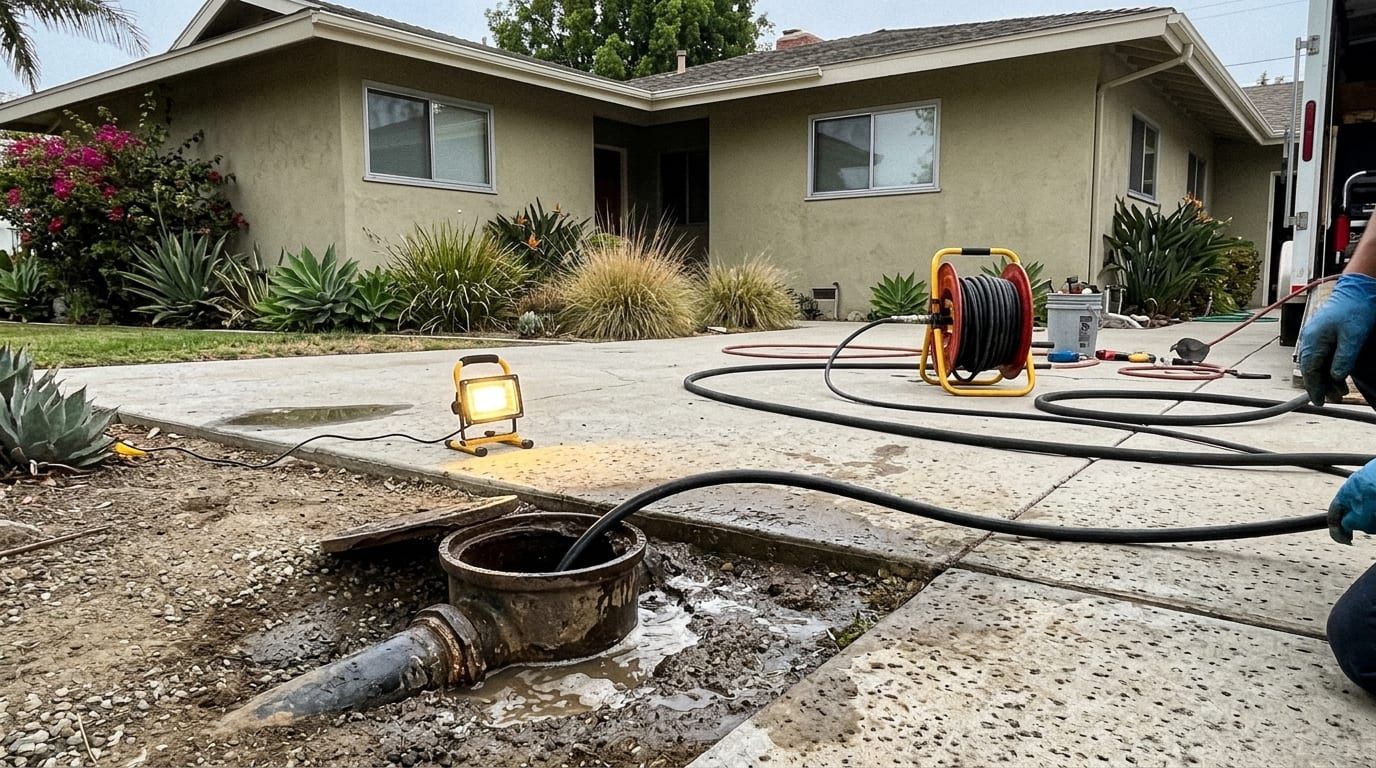
If the sink clears and then blocks again within a few weeks, stop treating the fixture and start looking at the pipe. Kitchen waste lines in houses built here in the 1960s and 1970s are cast iron, and cast iron corrodes from the inside until the wall is rough enough to hold on to everything that touches it. A cable through that pipe opens a hole without cleaning the wall, and the article on drains that keep clogging covers what a camera shows and when jetting is the right answer.
And if the kitchen backs up at the same moment as a bathroom fixture, or a garage floor drain weeps when the sink drains, the problem is not under the sink at all. That is the main line, and it starts somewhere else entirely.