
Repairs
Finding out why the water slowed down
Weak water is a symptom, not a diagnosis. The first question is whether it affects one fixture or every fixture, and the second is what a gauge on the hose bib actually reads, because those two answers rule out most of the list.
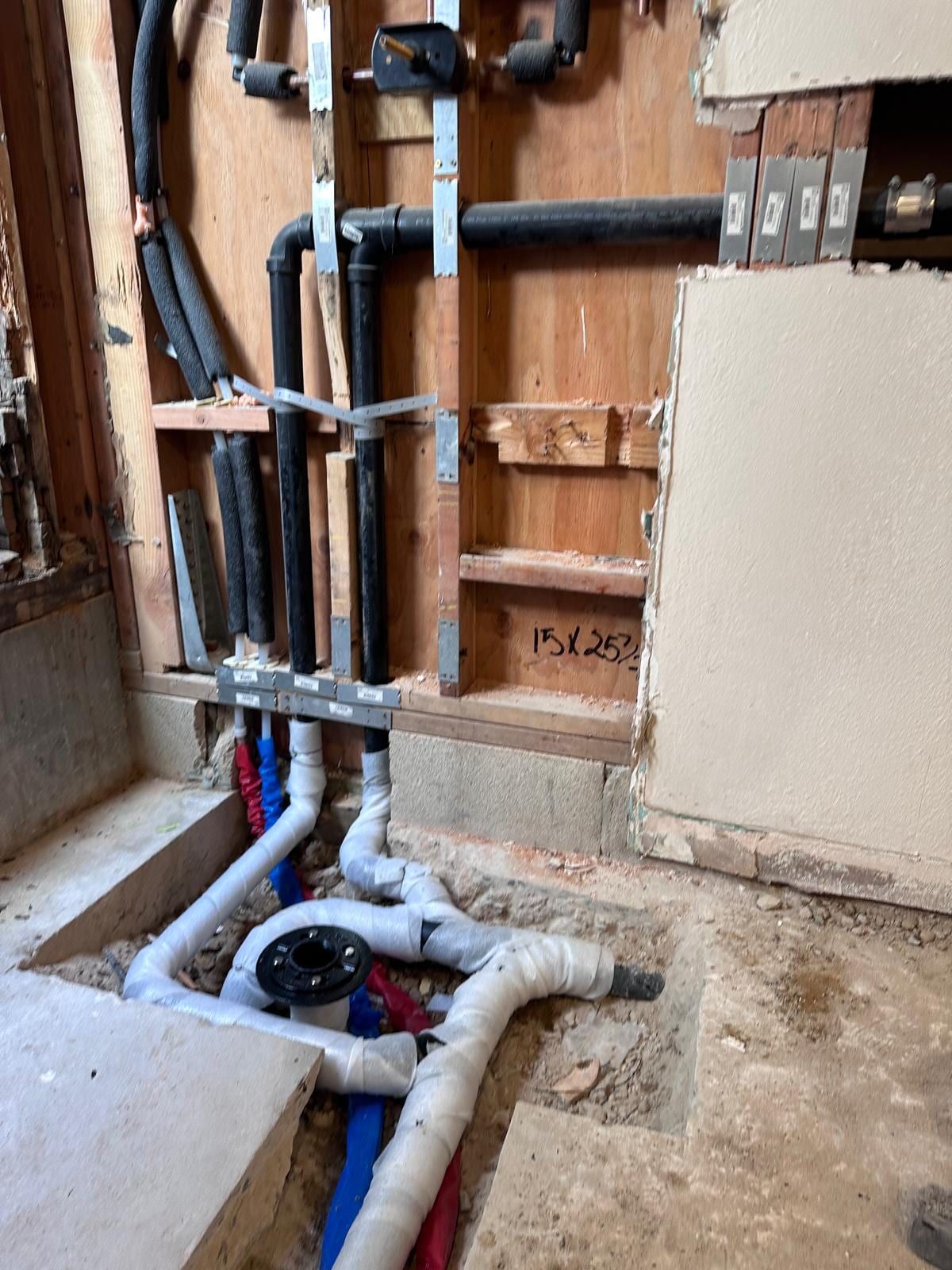
Walk the house before you touch anything. Open the kitchen tap, then a bathroom basin, then the tub, hot and cold on each. If one fixture is weak and the rest are fine, the fault is at that fixture: a scaled aerator, a clogged cartridge, a supply stop that is not fully open, or a kinked connector. If everything is weak at once, the fault is upstream of all of them: the main shut-off, a pressure regulator, the pipe itself, or water going somewhere it should not. Those are two different investigations, and starting them the wrong way round wastes an afternoon.
Pressure and volume are not the same complaint
People say low pressure and mean one of two things. Pressure is the force behind the water when nothing is moving. Volume is how much arrives per minute once it is. A pinhole aperture behind a scaled aerator can leave pressure untouched while volume falls off a cliff. A failing regulator drops both.
The distinction matters because it points at different parts. If the shower is still forceful but the tub takes an age to fill, think restriction and volume. If the shower has gone soft and every tap feels lazy, think pressure and think upstream.
Put a gauge on it before you buy anything
A screw-on pressure gauge fits a hose bib and settles the argument in about a minute. Take a static reading with nothing running in the house, then have someone open a tub spout fully and watch what the needle does. A reading that sits low and stays low is a supply or regulator issue. A reading that starts healthy and collapses the moment a fixture opens points at a restriction somewhere in the distribution, often corroded pipe.
Take the reading at different times too, morning and evening. Municipal supply pressure moves through the day, and a house that only goes weak at seven in the evening is telling you something a single reading will not.
One fixture only
Start at the outlet and work backwards. Unscrew the aerator and look at the screen. Costa Mesa is supplied from local groundwater, nine wells into the Orange County basin, and that water carries dissolved mineral by nature. Mineral deposits where flow slows and stops, which means aerator screens and shower head faces are the first things to load up. Soak the screen in white vinegar, brush it, refit it.
If cleaning does nothing, check the angle stop under the sink is fully open, then look at the flexible connector for a kink behind the trap. After that it is the faucet cartridge, which collects the same scale internally.
Weak on the hot side only
Hot-only weakness at every fixture is a water heater problem more often than a pipe problem. The same mineral that scales an aerator settles as sediment in the bottom of a tank and builds on a tankless heat exchanger. A partly closed valve on the hot outlet, or a failed dip tube, will do it too. Hot-only weakness at one fixture is usually just the hot side of that cartridge.
Six causes when the whole house is weak
The age of the house narrows the list fast
Costa Mesa housing has a median build year of 1972, with about two thirds of it built before 1980. That era is copper supply and cast iron waste, so full galvanised corrosion is less likely here than in the older stock elsewhere in Orange County. Rossmoor has a median build year of 1958 and Seal Beach 1966, and pre-1960 construction is where galvanised steel supply lines genuinely are the cause.
At the other end, a house in Irvine with a median build era around 2002 is PEX to a manifold. Whole-house pressure loss in a PEX house is almost never the pipe. It is the regulator, a valve, or a filter. Knowing what is in the walls tells you which of the six to check first, and it is the difference between an hour of testing and a week of guessing.
When low pressure is really a leak
Close every fixture in the house, including the ice maker and the irrigation, then go and watch the meter. If the low-flow indicator is turning, water is moving with nothing open. That is a leak, and it is stealing from the pressure at every tap.
Slab-on-grade construction is the norm around here, and the hot copper line runs in or under that slab. A slab leak announces itself with a warm patch on the floor, the sound of running water in a quiet house, hot water that never seems to be enough, and pressure that fell away over weeks rather than overnight. Do not open the floor to find it. It gets located first, with pressure isolation on the hot and cold sides and listening equipment, because the repair depends entirely on where it turns out to be.
Repair the fault or repipe the house
A repipe is the right answer when the pipe itself is the problem in every direction, meaning a house with genuinely corroded supply lines where fixing one branch just moves the complaint to the next one. It is the wrong answer when a regulator has failed, when a filter is loaded, or when one branch was undersized during a remodel, and selling it in those cases is selling the bigger job for no reason.
Repiping is permitted work through the city building department, or through Orange County on unincorporated land such as North Tustin, Rossmoor or Ladera Ranch, which is worth knowing before anyone starts opening walls.