
Emergency plumbing
Seven signs the break is on your side of the meter
The pipe between the water meter and your house belongs to you, and when it fails it rarely announces itself. It leaks quietly into the ground for weeks and shows up on a bill.
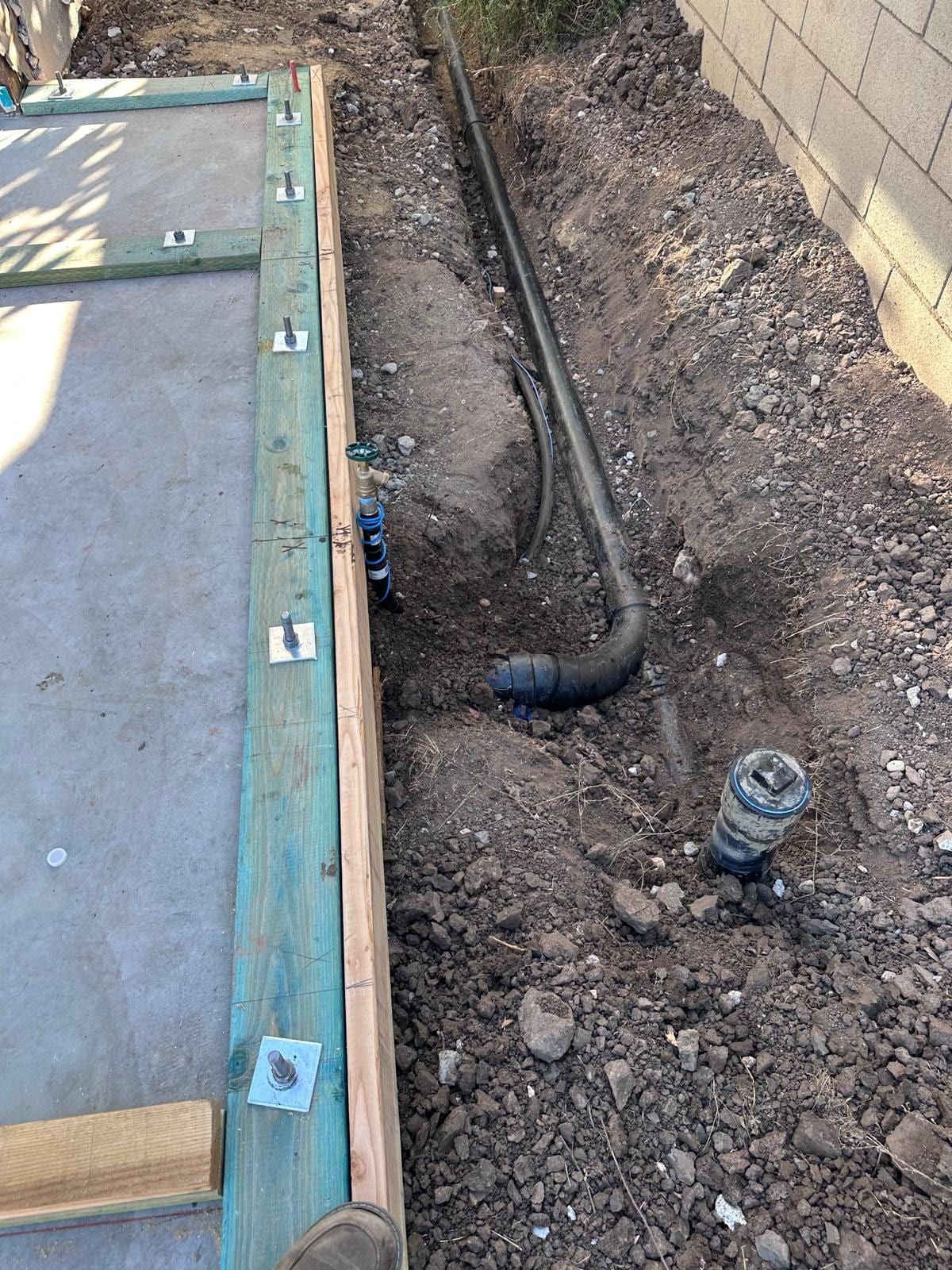
The seven signs, in the order we usually see them
1. The meter dial moves with everything closed
Shut every tap, appliance and irrigation valve, then watch the small sweep hand on the meter. Any movement means water is leaving the system somewhere between the meter and your fixtures. This is the definitive test and it takes ten minutes.
2. A bill that has stepped up without a change in habits
Not crept up — stepped. An underground leak produces a jump that stays high, because the loss is continuous rather than seasonal.
3. A patch of lawn that is greener or softer than the rest
Look along the likely route from the meter to the house. Grass over a leaking service line grows better and stays wet after the rest has dried out.
4. Water surfacing at the kerb or in the parkway
Water finds the easiest path, which is often along the pipe trench and out at the kerb rather than straight up. Damp asphalt on a dry week is worth a look.
5. Pressure that has fallen across the whole house
A significant leak upstream of the house takes pressure with it, and the drop affects hot and cold equally.
6. Air or spitting at the taps
Air in the system after nothing has been worked on suggests the line is drawing air at a break, or that the supply has been interrupted somewhere.
7. The sound of running water in a quiet house
Late at night, with nothing running, stand near where the supply enters the property. A continuous hiss or rush that does not stop is a leak under pressure.
Yours or theirs?
The dividing line is the meter. The utility owns the main in the street and, generally, the connection up to and including the meter; the service line from the meter to the house is the property owner’s. That is why the meter test matters so much: it tells you which side of that line the water is disappearing on.
If water is bubbling up in the street, if several houses lose pressure at once, or if the meter itself is the source, report it to the water utility rather than calling a plumber. In most of Costa Mesa that is Mesa Water District, which supplies this city entirely from local groundwater through its own wells.
What to do while you wait
If the leak is on your side and water is surfacing, close the main valve at the meter to stop the loss. The house will be without water, which is inconvenient and considerably cheaper than leaving it running.
Keep vehicles and heavy equipment off the wet ground. Saturated soil over a leaking line collapses easily, and a driveway that has been undermined is a much larger repair than the pipe that undermined it.
How we find it without excavating the garden
Elimination first. Isolating the house from the service line establishes which section is losing water; isolating irrigation from both halves the search again. Only after that does anyone listen along the run with acoustic equipment to fix the position within a few feet.
That sequence is what keeps the excavation small. On a large lot in Villa Park or North Tustin, the difference between systematic isolation and optimistic digging is measured in yards of trench and days of work.
Repair or replace the service line?
A single failure in a line that is otherwise sound is worth repairing. A line that has failed twice, or one made of a material that is now well past its service life, is worth replacing in one operation rather than paying for a trench three times.
The camera and the isolation tests answer that question before anyone quotes it. We will tell you which one you have, and we will show you why.
What your service line is probably made of
The age of the house predicts the material, and the material predicts how it fails. The median build year in Costa Mesa is 1972, and around two thirds of the city’s 44,427 housing units went up before 1980, so most service lines here belong to one of two vintages.
A pre-1960 house was plumbed in galvanised steel. It corrodes from the inside out, closes up over decades, then splits at a threaded joint. A house from the 1960s and 70s got copper, which fails differently: pinholes, often several within a few feet of each other, driven by conditions along the trench rather than by anything indoors.
That distinction decides repair against replacement. Galvanised that has begun to fail has been deteriorating along its whole length for years, and fixing one split just moves the next one along. Copper with a single pinhole may be sound over the rest of its run, and there is no honest reason to replace it on suspicion.
Things that look like a main break and are not
The meter test is honest but it is not specific. It says water is leaving the system; it does not say through what. Several ordinary faults move that sweep hand and none of them involve a shovel.
Closing the irrigation supply and taking the meter reading again separates outdoors from indoors in a quarter of an hour. Closing the stop under each toilet separates those out too.
What decides how big the job is
There is no standard service line replacement, because very little of the work is in the pipe. Nearly all of it is in what sits on top of the pipe.
The variables are the length of the run from meter to point of entry, the depth it was buried at, and the surface above it: lawn and a flower bed are one thing, a stamped concrete driveway or a mature root system another entirely. Then whether the new line can be pulled through the old route or has to be trenched the whole way, and what the surface has to be put back to.
Which is why a figure over the phone is worth nothing. Two houses on the same street, built the same year by the same builder, can be completely different jobs because of a driveway. Somebody has to come and look at it.
Permits, and why you want the inspection
Repiping and sewer replacement are permitted work through the Costa Mesa building department, and so is water heater replacement, which still surprises people. On unincorporated county land, which includes North Tustin, Coto de Caza, Ladera Ranch, Rossmoor and Rancho Mission Viejo, the permit comes from Orange County instead.
A permit is not a formality invented to slow the job down. It puts a second set of eyes on work that becomes invisible the moment the trench is backfilled, and it leaves a record on the property showing the work was done and signed off.