
Drains
The clog that comes back is telling you something
Clearing a drain and having it block again is not bad luck, and it is not a bad cable operator. It is usually information about the inside of the pipe. Here is how to read that information and what to ask for next time.
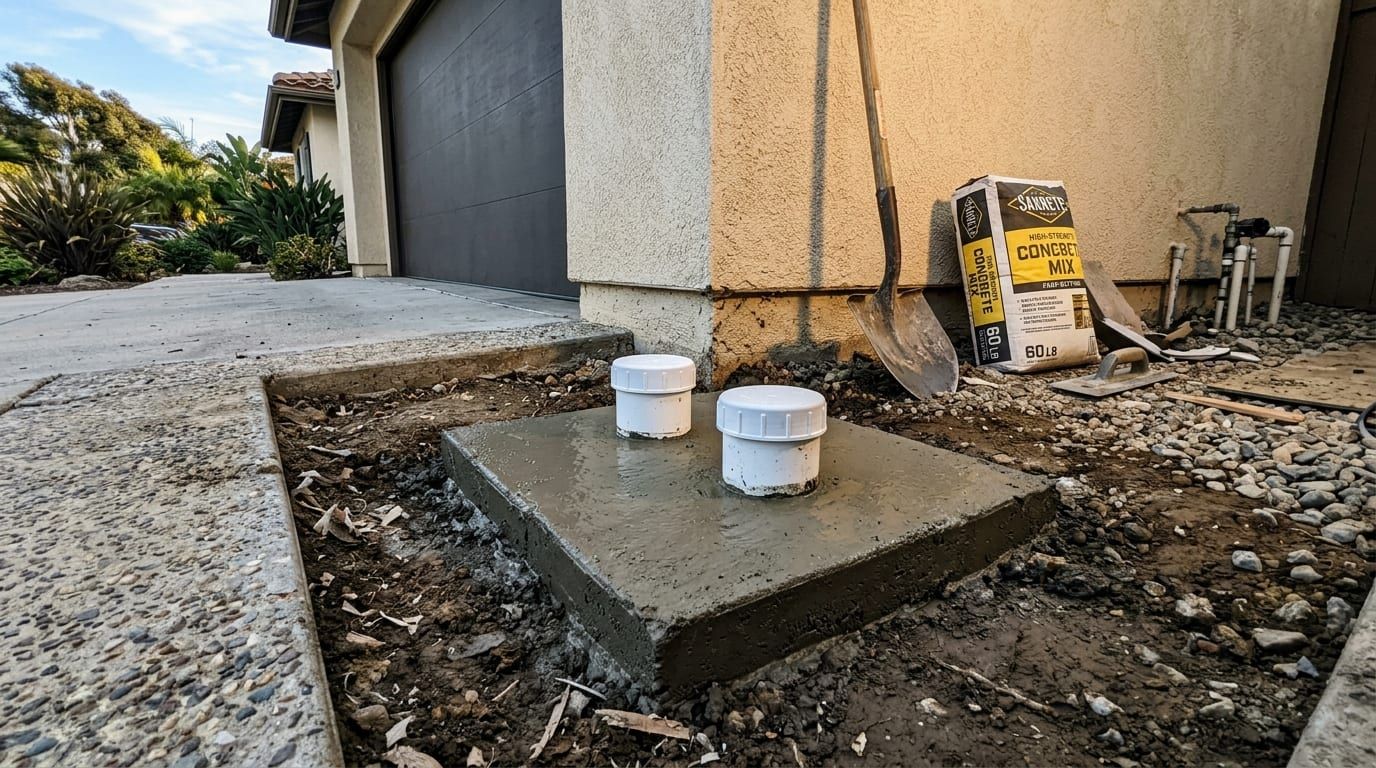
If the same drain blocks again a few weeks after it was cleared, the problem was never the thing that came out on the cable. It is the surface of the pipe. A cable cuts a channel through a blockage and the water runs again, which feels like a fix. But on an old line the blockage is often not a lump at all. It is a lining, built up around the whole inside wall, and a channel bored through it closes over again at the same rate it built up the first time.
A cable makes a hole, a jetter cleans a wall
A drain cable is a steel snake with a cutting head on the end. Turning inside the pipe, it punches through whatever is stopping the water and opens a channel roughly the width of that head. For some jobs it is exactly the right tool: a solid obstruction, a bunched wad of paper, a root ball that has to be broken before anything else can happen. What it does not do is touch the pipe wall on either side of the hole it just made.
Hydro jetting pushes a hose up the line with a nozzle that fires most of its water backwards. The rear jets pull the hose forward and scour the wall on the way back towards the operator, so the pipe is cleaned around its whole circumference rather than bored through the middle. On a kitchen line coated in years of grease, the difference on camera is the difference between a dark tunnel and a pipe where you can count the joints.
What builds up on a fifty-year-old line
Costa Mesa’s housing stock has a median build year of 1972 and 68 per cent of it went up before 1980. Waste lines from that era are cast iron inside the house and clay out to the street. Cast iron corrodes from the inside out. The wall goes rough, then scaly, and every rough patch catches something on its way past.
The kitchen is the worst of it. Fat leaves the pan as a liquid and turns solid a short way down a cool pipe under a slab. Soap and detergent build on top of that, and the water here does not help. Mesa Water District supplies Costa Mesa entirely from local groundwater drawn from nine wells into the county basin, and groundwater carries minerals, which makes soap residue heavier and stickier than it would be otherwise. Layer on layer, the usable diameter shrinks.
Once the diameter is down, anything with structure bridges across it. A fibre, a wipe, a strip of vegetable peel. Everything behind it then collects. That bridge is the lump the cable pulls out, and pulling it out does nothing about the diameter that let it form.
Five things a camera tells apart
From the top of a cleanout, five completely different faults produce the same symptom. On screen they look nothing alike.
Those five need five different answers, and there is no way to guess which you have by feel. That is why the camera goes in before anything is recommended, with footage markers on screen so the distance to the problem is known rather than estimated.
Roots find the joint, not the pipe
Clay laterals were laid in sections with mortared joints, and a joint that has shifted a fraction lets moisture out. Roots follow moisture, not pipe. They arrive as threads, thicken inside the line, and then catch everything moving past them. That is why a root-blocked drain usually backs up with paper, even though paper is not the cause.
A root cutting head or a root nozzle on the jetter clears them. Neither closes the joint they came through, so they return on a schedule set by the tree rather than by the plumber. Where a line has one bad joint and sound pipe either side of it, the honest answer is a spot repair at that joint, not replacing a run that has nothing else wrong with it.
When jetting is the wrong call
High-pressure water inside a pipe that has already lost its structure will find the weak point. Cast iron corroded until the bottom of the pipe is gone, which a camera shows as a channel of bare soil where the invert should be, does not improve with jetting. Badly cracked clay can be pushed further apart. That is a decision made from the screen, before the hose comes off the reel.
A belly is the other case. Jetting will clean it, and the standing water will still be there afterwards, because the fault is the grade of the pipe rather than anything inside it. Cleaning buys time between backups. It is not a repair and it should not be sold as one.
What actually changes the interval
Between the pipe you have and the habits in the house, the habits are the part you control today.
Ask what the camera showed
A drain that clears and stays clear is a reasonable expectation on a sound pipe. A drain that clears and comes back three weeks later, twice, is evidence about the pipe itself, and by that point it should have been filmed. Ask to see the screen. Ask for the footage marker where the problem sits. Ask what the line looked like after the work as well as before, because if nobody can show you the after, nobody knows what state the pipe is in now.
And if there is no ground-level cleanout to work from, that is worth solving first. It changes which tools can reach the line at all, and the article on finding your main cleanout goes through where to look.