
Repairs
The gauge reading that decides it
A pressure regulator is replaced on the evidence of a gauge, not on a symptom. Here is how to take the reading, what high, low and rising numbers each point to, and what the expansion tank has to do with any of it.
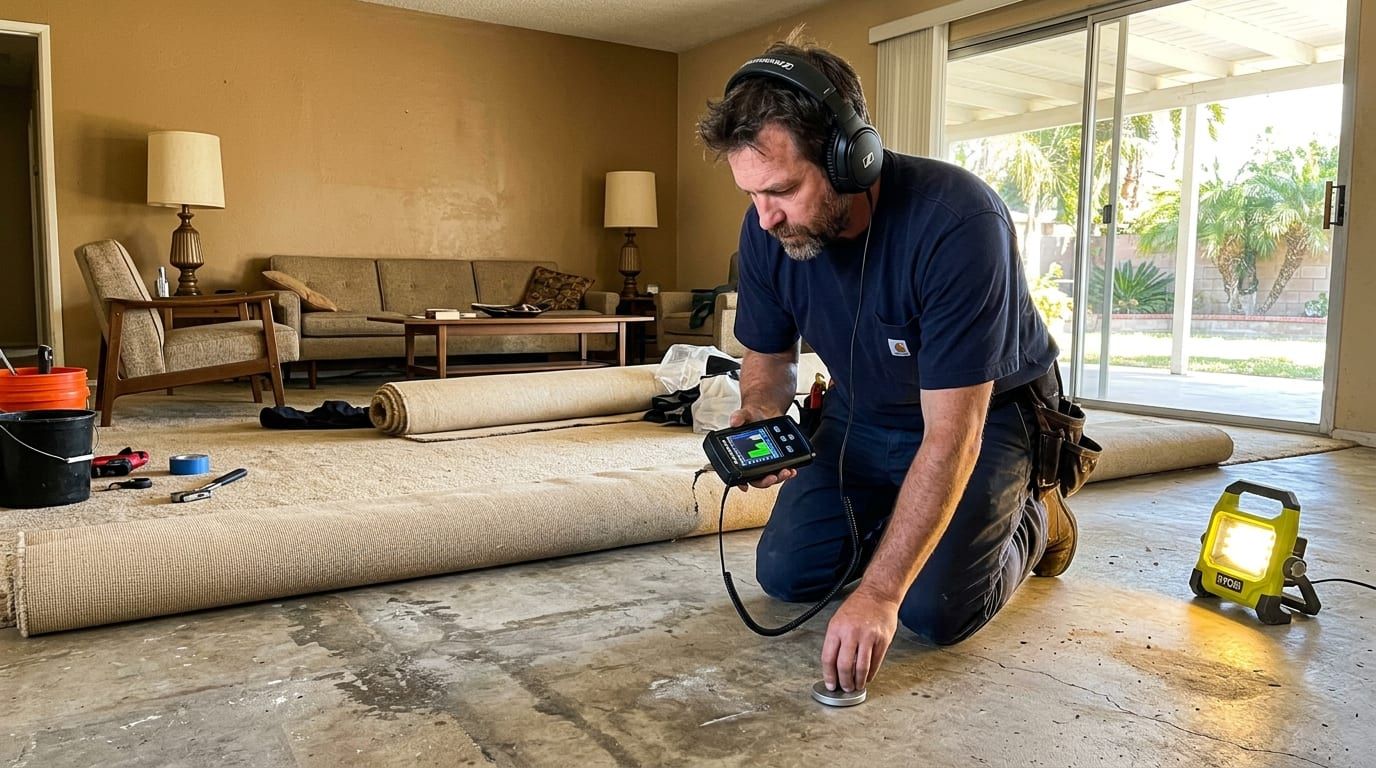
A water pressure regulator is replaced rather than repaired, and the decision comes from a gauge. Screw a pressure gauge onto an outside hose bib, shut everything in the house, and read the static pressure. If it sits above the code ceiling of 80 psi for water supply into a building, if it drifts upward over an hour, if turning the adjusting screw barely moves the needle, or if it has sagged so far that two showers cannot run together, the regulator has finished its working life. Everything else in this article is about reading that number properly.
Taking the reading
Use the hose bib nearest the meter, since that is closest to where the regulator sits and gives the cleanest number. Close every tap, the ice maker and the irrigation controller, then read the gauge with nothing moving. That is static pressure. Open a tap and watch how far the needle falls, which shows what the system does under demand. Then leave the gauge on for an hour after someone has showered and read it again. Street pressure is not constant either, so a reading at seven in the morning and another at ten at night are worth more than one taken once.
What the number is telling you
High and steady
A regulator stuck open, or a house that never had one, delivers whatever the main is carrying straight to every fixture. The pipe copes. The soft parts do not. Toilet fill valves, dishwasher and washing machine inlet solenoids, flexible connectors and tap washers all live shorter lives, and they fail in the order of how cheap their rubber is.
Low, or falling away under demand
A tired diaphragm or a broken spring lets outlet pressure sag, and a clogged inlet screen does the same thing. There is a useful distinction here. If static pressure is respectable but collapses the moment one tap opens, the restriction is in the piping rather than in the regulator, and on a pre-1960 house with galvanised steel supply that is usually corrosion narrowing the bore.
Climbing when nothing is running
If the needle sits still at night and then climbs after the water heater fires, you have thermal expansion in a closed system. The regulator or a backflow device at the meter stops water flowing back toward the street, the heater warms a tank of water that then wants more room, and with nowhere to go the pressure rises against every joint in the house. That is a different fault from a worn regulator and it is fixed differently.
Symptoms that get blamed on the wrong part
Why regulators are swapped rather than rebuilt
A regulator is a brass body containing a spring, a diaphragm and a seat, and rebuild kits exist for some models. By the time one has failed, the seat and the inlet screen are usually scaled, and the diaphragm is not the only worn part in there. Mesa Water District supplies Costa Mesa entirely from local groundwater drawn through nine wells into the Orange County basin, and groundwater carries minerals, so scale on internal surfaces is the ordinary picture rather than the exception. Opening the unit takes the same shutdown, the same access and most of the same labour as fitting a new one, and only one of the two comes with a fresh seat.
Where it sits on a house here
Look just past the meter, where the service enters the property. On most Costa Mesa homes the regulator is a bell-shaped brass body with an adjusting screw and a lock nut on top, either in the meter box, in a small valve box in the planter, or on the riser near the front hose bib. Costa Mesa’s median build year is 1972 and roughly 68 per cent of the housing stock went up before 1980, so a regulator that has never been changed is around fifty years old and long past its service life. Some houses of that era never had one at all, because street pressure was lower when they were built and the main has been repressurised since.
The expansion tank question
Once a regulator or a backflow device is in place, the house becomes a closed system and thermal expansion has to go somewhere. A code-compliant water heater installation accounts for it with an expansion tank where the system requires one, alongside two seismic straps anchored to structure, a drip pan with a drain line, a full-size temperature and pressure relief line ending near the floor with no valve in it, correct venting, and a sediment trap on the gas line. If your pressure climbs after the heater cycles and a tank is already fitted, that tank may be waterlogged. A tank full of water sounds solid when tapped and no longer absorbs anything, and its air charge should match the pressure the regulator is set to.
What the replacement involves
Water off at the meter, the old body cut or unthreaded out, and the new unit set with unions or press fittings so that the next replacement is not another excavation. Then it gets adjusted with a gauge on the line and a tap running, not by feel, and static pressure is checked again once everything is closed. After that the house gets walked: fixtures that have been living at high pressure sometimes reveal themselves when the pressure changes, and old angle stops that were disturbed do not always reseat. That is worth saying before the work rather than discovering together afterwards.
Keep the gauge
The gauge costs less than any part discussed here and it is the only tool that turns an argument into a measurement. Leave it in the garage, read the tap twice a year, and write the date and the number on a strip of masking tape stuck to the regulator body. Two or three readings across a couple of years show drift long before a toilet valve starts running at midnight, and they give whoever works on the house next something real to start from.