
Drains
Reading the smell coming out of a shower drain
Sewer gas and biofilm are both common, and neither is hard to identify once you know what each one smells like. This covers dry traps, the layer growing on hair inside the pipe, and the gurgle that means the vent is the real fault.
Two different faults make a shower drain smell, and they smell different. A sharp, sulphurous, unmistakably sewage odour means gas from the drain system is getting into the room, which almost always means the water seal in the trap is gone. A musty, sour, slightly sweet smell that is strongest in the first minute of a hot shower is biofilm, the soft grey layer growing on hair and soap trapped inside the drain and the arm behind the wall. Identify which one you have and the fix is usually short.
The trap seal, and how it disappears
Under every shower is a P-trap, a U of pipe that stays full of water and seals the drain system off from the room. Nothing holds that water in place except the shape of the pipe. If the water evaporates, the seal opens and the drain system vents straight into the bathroom.
Evaporation takes weeks rather than days, which is why this turns up in a guest bathroom nobody uses, a second shower in a converted garage, or any house after a long trip. It also turns up in summer, when the air in the room is warm and dry. The test costs nothing but time: run the shower for two minutes and see whether the smell is gone by the evening.
For a shower that genuinely sits unused, pour a jug of water down it once a month and follow it with a spoonful of cooking oil. The oil floats on the trap water and slows the evaporation considerably.
Biofilm, the layer on the hair
The other smell is organic and lives inside the drain. Hair mats across the strainer and just past it, and skin oil, conditioner and soap residue collect on the mat. A soft grey-brown film grows over that. It is not dangerous, but it smells sour and stale, and it is at its worst during a hot shower because heat and steam lift the odour up out of the drain.
Houses here make it worse than it needs to be. Costa Mesa is slab-on-grade and mostly built around 1972, so the shower trap and the arm behind it are frequently cast iron, cast into the concrete. The inside of a fifty-year-old cast iron trap is not smooth; it is scaled and rough, and a rough surface holds film in a way that a smooth ABS pipe does not. That trap cannot be replaced without opening concrete, which makes cleaning it properly matter far more than it would in a newer house.
Telling the two apart
Gurgling points at the vent
Drain pipes need air behind the water. That air comes down vent pipes that run up through the roof. If a vent is blocked by a nest, leaves, a builder’s rag left in it during construction, or a section that has corroded shut, then a large slug of water going down the line pulls a vacuum behind it and takes the easiest air it can find. Often that is the water sitting in a nearby trap.
That is siphoning, and it means the shower loses its seal every time the washing machine drains. Cleaning the shower will not touch it. The check is on the roof and inside the line, and the fix is at the vent, not at the drain that smells.
Cleaning the drain without damaging the pipe
Leave caustic drain openers out of this. They sit on top of a hair mat instead of passing through it, they generate heat inside an old cast iron trap, and they turn the water in that trap into something nobody should be opening a pipe into afterwards.
When the shower is not the source
A failed wax ring under a nearby toilet leaks gas at floor level, and the smell drifts to the lowest, coolest opening in the room, which is usually the shower. A laundry standpipe with too short a trap arm does the same thing in a hallway. Under a slab, a cracked cast iron waste line can release gas into the fill beneath the concrete, and it finds its way up wherever the slab has been penetrated.
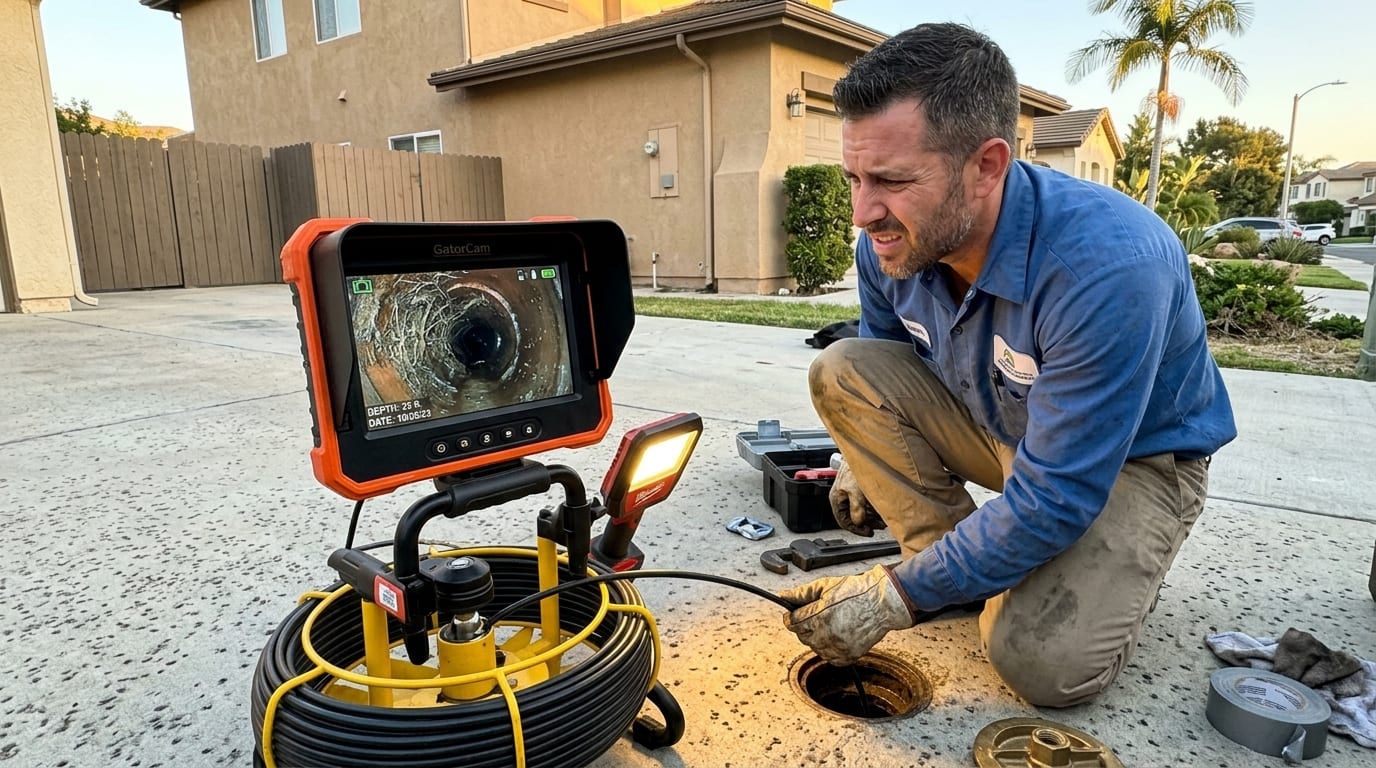
Those are found by elimination and, where it is worth doing, by putting a camera in the line rather than guessing at it. A smell that survives a refilled trap and a genuinely cleaned drain is worth investigating properly instead of covering with a scented block.
Keeping it from coming back
A hair catcher over the drain removes most of what feeds the film in the first place. A jug of water down every drain that goes unused for a month keeps the seals full, and the same applies to a garage floor drain, which the article on floor drain backups goes into. And if the shower is slow as well as smelly, deal with the slowness first: a drain that empties in a few seconds does not hold enough standing water to grow anything worth smelling.