
Water heaters
Five reasons the pilot will not stay lit
Relight it once. If it goes out again, stop relighting and start diagnosing, because a pilot that will not hold is a safety device doing its job. These are the five causes, and each one leaves a different signature.
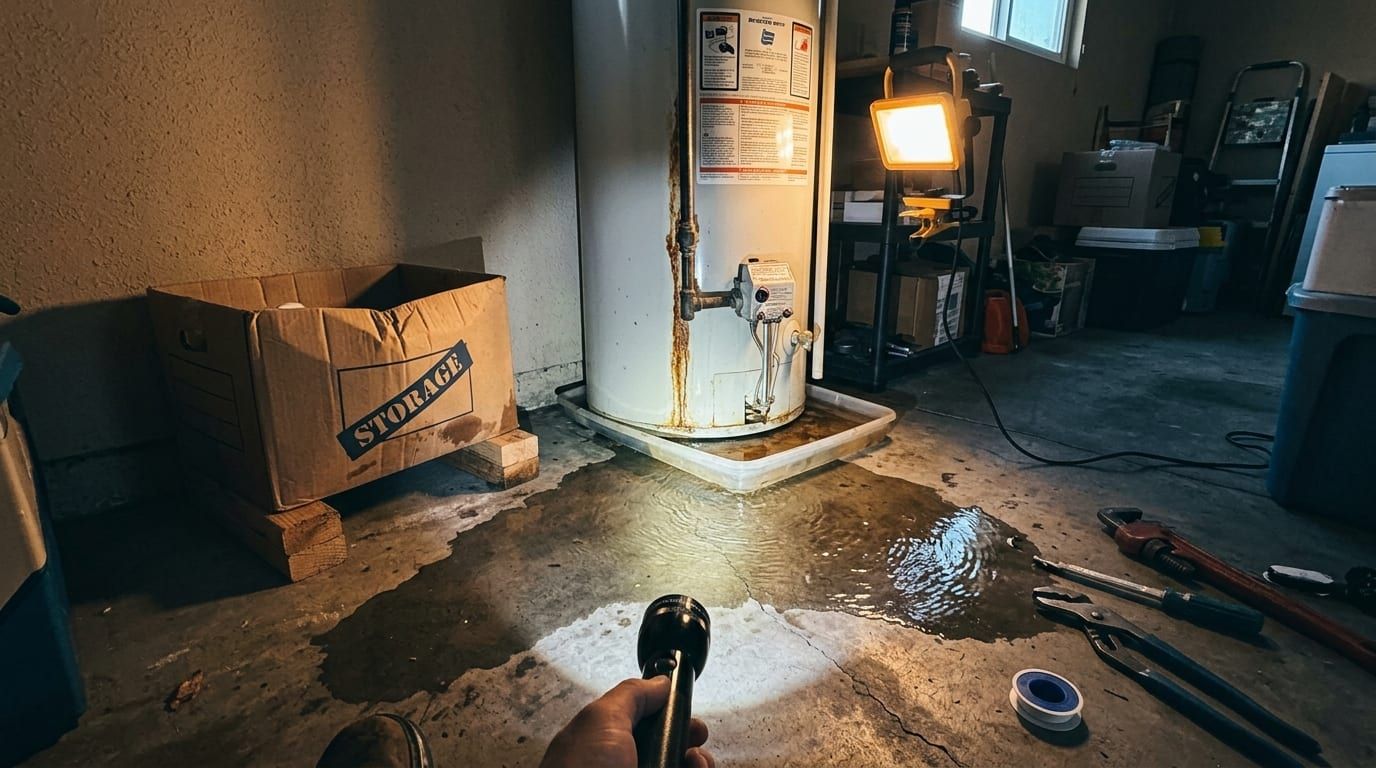
Relight the pilot once, following the label on the front of the heater. If it lights and stays lit for good, you had a momentary interruption and there may be nothing more to it. If it drops out again within a day, stop relighting it. The control is not being awkward. A pilot that will not hold is a safety system doing exactly what it was designed to do, and repeatedly forcing it past that is the one genuinely dangerous response available to you. Five things cause it, and they are distinguishable from one another by how the flame behaves.
1. The thermocouple has stopped confirming there is a flame
A thermocouple is a probe that sits in the pilot flame and generates a tiny electrical current from the heat. That current is what holds the gas valve open. Take the flame away and the current stops within seconds, and the valve shuts, which is the entire point of the arrangement. Probes soot up, oxidise, drift out of position and simply wear out. The signature is unmistakable: the pilot lights while you hold the button in, burns steadily, and dies within a few seconds of you letting go. This is the most common cause by a wide margin and it is a small part and a routine replacement.
2. The combustion air intake is choked
Modern tank heaters draw combustion air through a screen around the base of the unit. In a garage that screen collects dryer lint, dust, pet hair and the general debris of a garage floor, and it can be smothered entirely by boxes stacked against the heater or a car cover left draped over it. The signature is a pilot that burns lazily or yellow rather than crisp and blue, that survives on its own but drops out once the main burner fires and takes the available air, and that behaves perfectly for a while after the door has been open. Cleaning the screen and keeping a clear space around the unit fixes it.
3. Draught, backdraught, and a house that pulls harder than the flue
Sixty-eight per cent of Costa Mesa’s housing was built before 1980, and a great many of those heaters vent into flues laid out for a house that leaked air freely through original windows and doors. Replace the windows, seal the house up, add a powerful range hood and a couple of bathroom fans, and the building can now pull harder than the flue can supply. The signature is a pilot that goes out on windy days, or the moment the extractor or the dryer starts, or when the garage door goes up. Take this one seriously: the same condition that blows the pilot out can push combustion products back into the room instead of up the flue.
4. The gas supply is unsteady
A pilot needs a small but constant supply at the right pressure. A failing regulator, a partially closed valve, a kinked flex connector, or another appliance starting up and taking the pressure down momentarily will all put it out. So will a blocked pilot orifice, and the classic blockage is a spider that has built inside the pilot tube, which is a genuinely common find in coastal garages. The signature is a weak, small or wavering pilot flame, or one that drops out reliably the moment the furnace or the range fires up.
5. The gas control valve or the thermal cut-off has had enough
Sealed-combustion heaters carry a one-shot thermal cut-off switch. If flammable vapour ignites at the base, or the air supply is blocked badly enough for long enough, the switch latches out permanently and the heater will not light again at all. It does not reset, and it is not meant to. The gas control valve itself can also fail outright. The signature here is a heater that will not light no matter what, or one that still refuses to hold with a brand new thermocouple fitted. Note that a tripped cut-off is evidence that something happened, and finding out what happened matters more than replacing the switch.
Stop and call before relighting if any of this is true
How the diagnosis actually runs
In order, because guessing at parts is how people end up paying for two visits. Look at the flame and its colour first, since that alone separates an air problem from an electrical one. Check and clean the intake screen. Read the thermocouple output under load rather than assuming it is fine because it looks fine. Test the draft at the hood, with the extractors running, because a house that fails that test will keep putting out pilots no matter how many parts get fitted. Then check gas pressure at the inlet and the manifold, and check whether the cut-off has latched. You get shown the readings on the meter as we go.
When the pilot problem is really an age problem
Read the manufacture date off the rating plate before spending anything. A four-year-old heater with a failed thermocouple is a straightforward repair and we will do it without further comment. A fourteen-year-old heater on its second gas control valve, with a bed of sediment on the bottom and rust weeping around the burner opening, is a different conversation, and it is one we will have honestly rather than fitting a part that buys three months. Neither answer is automatic, which is why the date gets read out first.
One useful habit in the meantime: write the date on a scrap of tape stuck to the jacket every time you relight it. Three relights inside a month is a pattern rather than bad luck, and a pattern with dates on it is something a plumber can work from before the heater fails on a Sunday.