
Sewers & repiping
How roots get into a sewer lateral and what actually stops them
Root intrusion starts at a pipe joint and ends with waste on a bathroom floor. Here are the signs in the order they usually appear, the reason a snaked line fails again within weeks, and the repairs that actually close the seam the root came through.
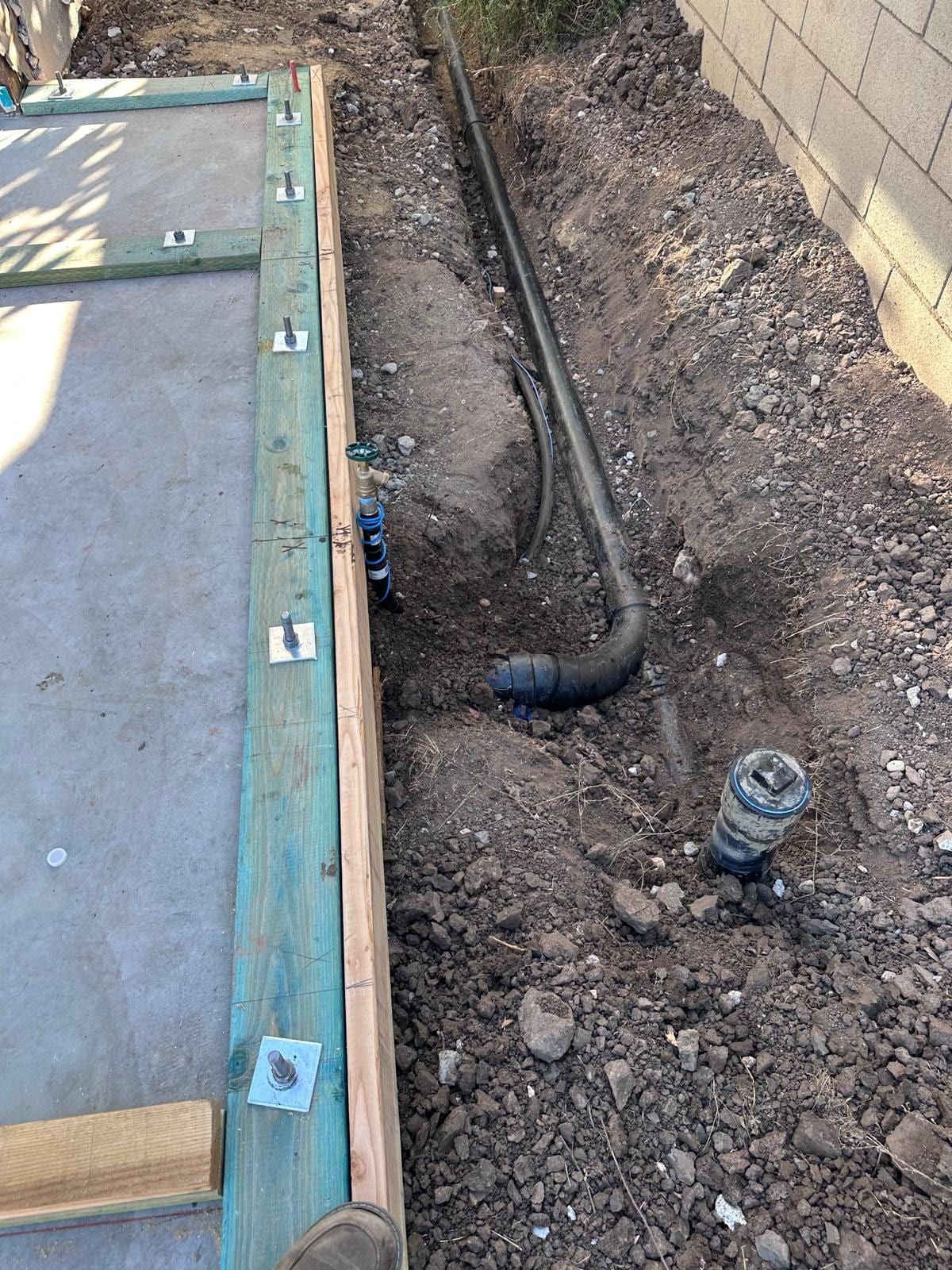
Roots get into a sewer line at its joints. A pipe carrying warm waste leaks a little vapour into the soil around it, a root finds that seam of moisture and grows towards it, and once a hair-fine tip is through the joint it thickens inside the pipe where nothing stops it. The first sign is almost never a flood. It is a toilet emptying more slowly than it used to, or a gurgle in a shower drain when the washing machine dumps. By the time waste comes back up through a fixture, the roots have usually been there a year or more.
The signs, roughly in the order they show up
Why the pipe and not the sprinkler line
Roots go towards water and towards oxygen, and a leaking sewer joint offers both. Fine roots are opportunists. They do not break into sound pipe wall; they exploit a seam that is already there. That is why intrusion is a joint problem and an age problem far more than a tree-species problem. A row of shrubs over modern fused pipe causes nothing at all. One mature tree fifteen feet off the line of an old clay lateral with a hub every few feet causes everything.
Clay hubs, cast iron and a 1972 house
Costa Mesa’s median house was built in 1972, and roughly two thirds of the housing stock predates 1980. Under those houses the usual arrangement is cast iron waste out of the building and clay beyond it. Clay was laid in short lengths with a hub at each connection, sealed with mortar or an oakum joint that has had five decades of ground movement working on it. Those hubs are the entry points. Cast iron joints leak as well, though the more common cast iron failure is different: the bore fills with scale, and roots arriving later find plenty to hold on to.
The other thing an old lateral here gives a root is distance. The homeowner owns the pipe all the way to the district main under the middle of the street, so the private run passes under the front garden, the parkway strip and often a lane of asphalt, with mature street trees beside it much of the way.
Why the same drain backs up three weeks after it was cleared
A cable with a cutting head does one thing. It opens a channel through the obstruction so water can pass. That is genuinely useful at eleven at night with a bathroom filling up. It is not a repair. The roots get cut flush with the inside of the pipe, the root system outside is untouched, and it grows back into the same joint faster than before because it has just been pruned.
Hydro jetting works differently. A high-pressure nozzle pulls itself along the line and scours the wall back to bare material, taking root mass, grease and scale off the pipe rather than boring a hole through them. On a fifty-year-old cast iron line this distinction decides the outcome, because the restriction there is frequently a lining built up along the whole bore rather than a lump in one place. Cable through a lining and you get a clean-looking hole and a drain that fails again in a month. Cleared, fine for three weeks, blocked again is the most reliable sign anywhere in this trade that the line needs filming rather than snaking a third time.
What roots do to the pipe itself
The blockage is the part people notice. The damage is quieter. A root thickening in a joint levers it apart, and the gap that opens lets soil in and waste out. Waste washing into the surrounding soil erodes a void, the pipe loses its support and the section settles into that void. That is how a root problem turns into a belly, a misaligned joint or a break. It is also why root work is worth doing before the backup rather than after, since the repairs available to a pipe that is still in one piece are much smaller than the ones available to a pipe that is not.
The fixes, from smallest to largest
There is a real ladder here, and the right rung gets decided by a camera survey rather than by the size of the last bill.
We do not push the bigger job when the smaller one holds. A survey showing one joint at twenty-two feet with clean pipe either side is a spot repair, and saying that out loud costs us the larger job.
Chemicals, barriers and the tree itself
Copper sulphate and foaming root killers kill the tissue they touch inside the pipe. They do not repair the joint, and they do not stop a root returning to a seam that is still open, so treat them as a way of slowing regrowth between real repairs. A physical root barrier can help where one specific tree is the culprit and the line is being rebuilt anyway.
The tree is rarely the right thing to remove, and it may not be yours to remove in any case. Trees in the strip between the pavement and the kerb often belong to the city, so ask before anyone gets a saw out. A sealed pipe and a tree that stays is usually the better outcome.