
Sewers & repiping
How to tell a sewer problem from a drain problem
One slow sink is a sink problem. Symptoms that show up in several fixtures at once, return on a schedule, or appear out in the yard are the lateral talking. Here is how to read each one before anyone quotes you anything.
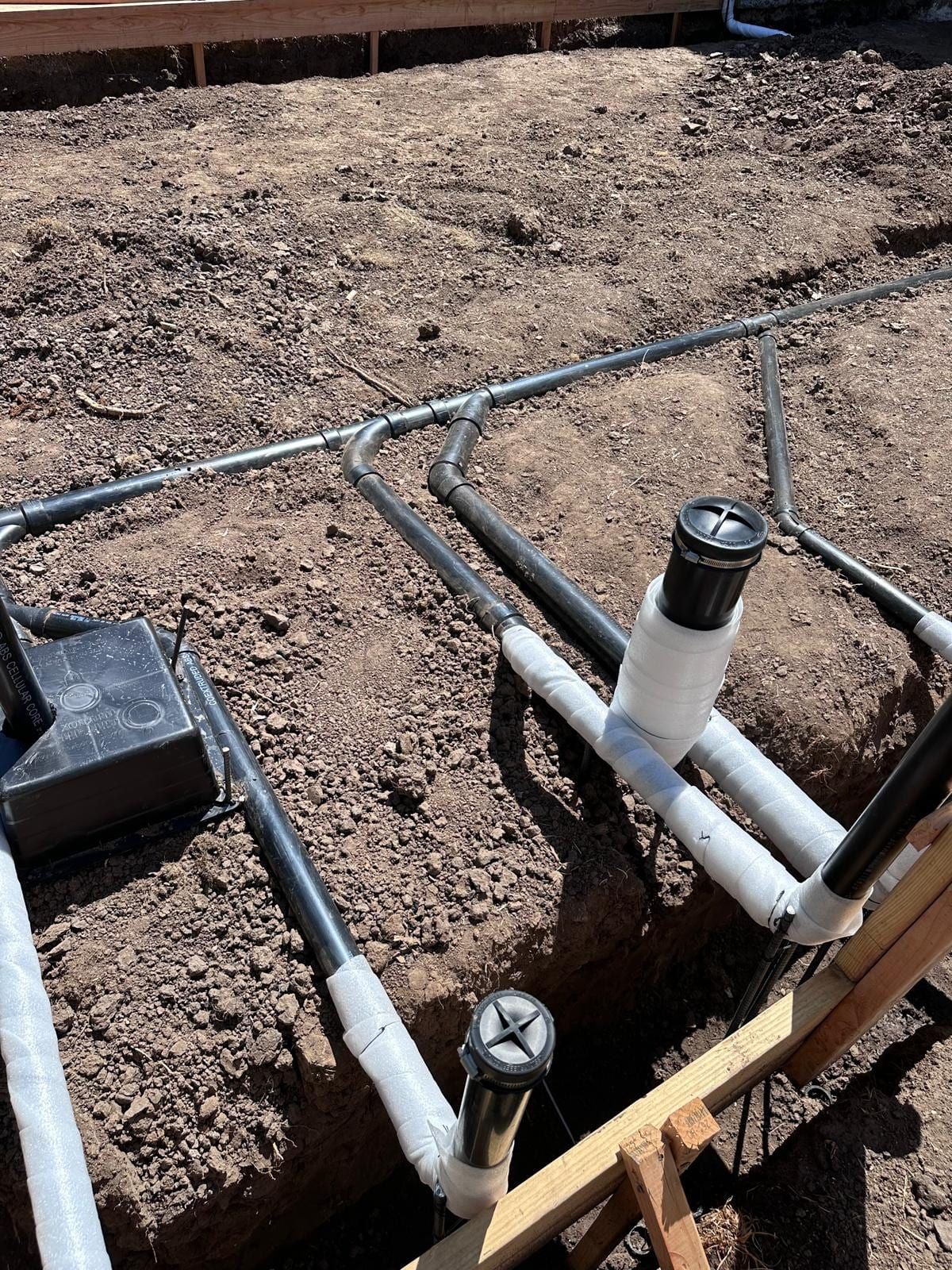
A sewer line needs repair rather than another cleaning when the symptoms appear in more than one fixture, come back on a schedule, or show up outside the house as well as inside it. A toilet that gurgles while the washing machine drains, a shower that fills when someone flushes, a backup that returns three weeks after the last one: those point at the main run, not at the trap under the sink. The five signs below are the ones that most reliably separate a blocked branch from a failing line, and a camera pass is what turns any of them from a guess into a finding.
One fixture or all of them: the question that sorts the rest
Every fixture drains into a branch, and every branch drains into the main line that leaves the house. If the fault is in a branch, only the fixtures on that branch misbehave and everything else runs normally. If the fault is in the main, water backs up at the lowest opening it can find, which is why a ground-floor shower pan or a garage floor drain fills while the upstairs basin still empties. Note which fixture went wrong first and how low in the house it sits. That single observation narrows the search more than any product poured down a drain.
Five symptoms and what each one is telling you
1. The toilet gurgles when something else drains
Water moving down a pipe pushes air ahead of it. If the air cannot get past an obstruction and out through the vent, it comes back up through the nearest water seal, which is a trap, and you hear it. A toilet bubbling while the washing machine dumps means the restriction sits downstream of both of them. The same noise from the fixture furthest down the line means the restriction is beyond even that.
2. The lowest fixture in the house floods first
A blocked main has to release the water somewhere, and it chooses the lowest opening. On a slab-on-grade house that is usually a ground-floor shower or tub, sometimes a floor drain. Sewage rising in a tub when nothing was run in that bathroom is not a bathroom fault at all. Stop using water in the house at that point, because everything that goes down anywhere is heading for the same relief point.
3. The same drain backs up on a cycle
Cleared, fine for three weeks, blocked again. Cleared again, fine for a month. A pattern like that means the cleaning is treating a symptom and the pipe itself has changed. The section below explains the mechanism, because it is the single most useful thing a homeowner can understand about an older line.
4. There is a wet, sunken or unusually green patch over the run
Sewage escaping from a cracked joint feeds the soil and the plants above it, so a strip of lawn that is greener and grows faster than the rest can mark the line. So can a soft spot underfoot, a slight dip in a driveway, or a smell in the yard that gets worse after rain. Roots go where the water is; a joint that leaks a little in June is a joint packed solid with root hair by autumn.
5. Dark grit or scale flakes turn up at the cleanout
Hard black or rust-coloured flakes in a shower pan, at a floor drain or on the cutter head after a cleaning are pieces of the inside of a cast iron pipe. That is not debris passing through. That is the pipe itself arriving in bits, and it says the wall has been losing material for years.
Why the same drain backs up three weeks after it was snaked
A cable clears a channel through a blockage. The cutter bores a hole, the standing water drains, the drain works, and everyone goes home. On fifty-year-old cast iron the blockage is often a lining rather than a lump: corrosion scale grown inward around the whole circumference, rough enough that grease and paper catch on it within days. Cutting a hole through the middle of that leaves the rough wall exactly as it was. Hydro jetting is a different action, scouring the pipe wall back to bare material so there is nothing left to catch on.
Jetting has its own limits and they are worth stating plainly. It does not repair a cracked pipe, it does not lift a sagging one, and on a pipe already thin from corrosion a high-pressure jet can find the weak spot. That is why the camera goes in first and the recommendation comes second, in that order and not the other way round. If somebody quotes a repair before anything has been filmed, the quote is describing a guess.
Costa Mesa housing stock puts a date on the pipe
Costa Mesa has 44,427 housing units and a median build year of 1972, with 68 per cent of them built before 1980. Houses of that era were plumbed with cast iron waste piping inside and clay or cast iron out to the street, and both materials fail in known ways. Clay fails at the joints, where roots enter and where sections shift out of line. Cast iron fails by scaling inward and losing wall thickness along the bottom of the pipe, where the flow runs. So in Mesa Verde or on the Eastside, a line that has started acting up is rarely doing so at random; it is a material reaching the end of a predictable life.
What to do between the first symptom and the appointment
What can wait until morning and what cannot
If sewage is coming up onto a floor, or the only working toilet in the house has stopped, that is now. If one upstairs basin drains slowly and every other fixture behaves, that can wait until morning and someone should tell you so rather than sell you a midnight visit. Distance is worth being straight about too: a van leaving Costa Mesa reaches Newport Beach in a couple of miles and Huntington Beach in under five, but San Clemente is a twenty-three mile drive and it is fair to say so out loud when quoting a time.
Turning a symptom into a finding
None of these five signs identifies a defect on its own; each one narrows where to point the camera. The Costa Mesa Sanitary District runs a rebate programme covering a CCTV inspection of the lateral or the installation of a ground-level cleanout, so a survey is worth arranging before you commit to any repair. Ask to watch the screen while the camera runs, and ask the operator to call out the footage count at anything he stops on. Then have the defect located and marked on the ground with paint, and photograph the mark. If two contractors later disagree about the work, that painted mark and the footage number are what settles it.