
Drains
Nine habits that stop drains blocking in the first place
Prevention is mostly about what does not go down the pipe and how much water follows what does. Nine habits, ordered by how much difference each one makes, and an honest note about the point where habits stop being enough.
The short version: keep fat, coffee grounds, wipes and hair out of the system, run enough cold water to carry what does go down past the trap arm, and get the sewer lateral filmed once so you know what you are working with. The nine habits below are specific rather than general, and they are ordered by how much difference they make in a typical house. The last section is the honest part, because habits change how often a drain blocks and they do not change what the pipe is made of.
Three habits in the kitchen
Three habits in the bathroom
Three habits for the laundry, the garden and the rest of the house
The one-off that beats all nine
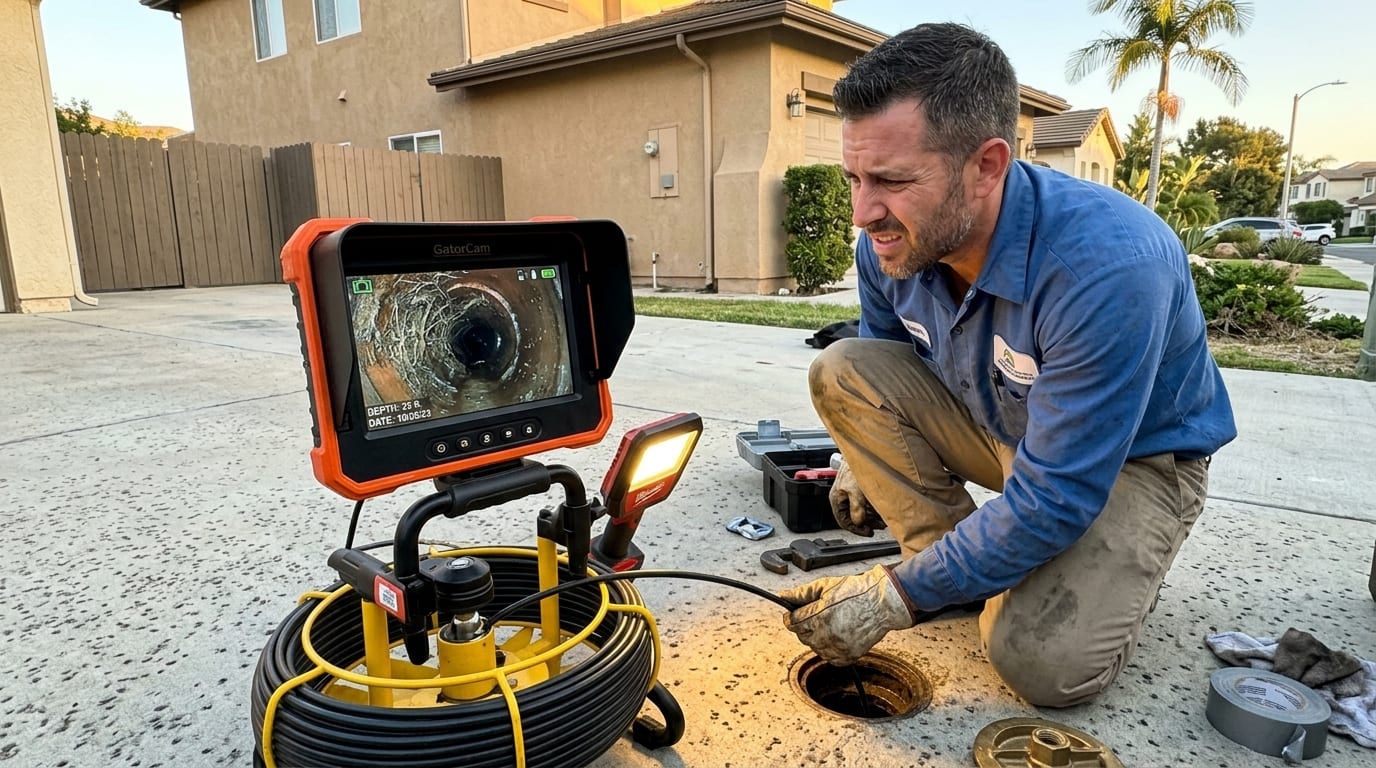
Habits manage what you put in. A camera tells you what you already have. In Costa Mesa the homeowner owns the sewer lateral all the way to its connection with the district main, which is usually under the middle of the street, so a substantial length of pipe is your responsibility whether or not you have ever seen it. The Costa Mesa Sanitary District runs a rebate programme covering a CCTV video inspection of that lateral or the installation of a ground-level cleanout. We do not run the programme and will not put a number to it, so check the district’s own page for what it covers. What one recording gives you is a baseline: material, condition, joints, roots, any low section, and a reference point for comparing against in five years. That is worth more than any amount of care at the plughole.
Sold as drain-friendly, and not
What habits cannot fix
Costa Mesa’s median build year is 1972, with 68 per cent of its housing units finished before 1980. In houses of that age the waste pipe under the floor is cast iron, and cast iron narrows from the inside over decades regardless of how carefully anyone cooks. Older stock again, from before 1960, adds a clay lateral with a joint every few feet for roots to find. Good habits genuinely stretch the interval between blockages, sometimes by years. They do not restore a bore or close a joint. If a line blocks roughly annually while everyone in the house is doing all nine of these things, the habits are not the variable, and the useful next move is a camera rather than more discipline.
A short seasonal check
Write the date of anything you do inside a cupboard door, whether that is a trap cleaned out or a line professionally cleared. The interval between events is the single most informative number about your drainage, and it is the one nobody ever has to hand when it matters.